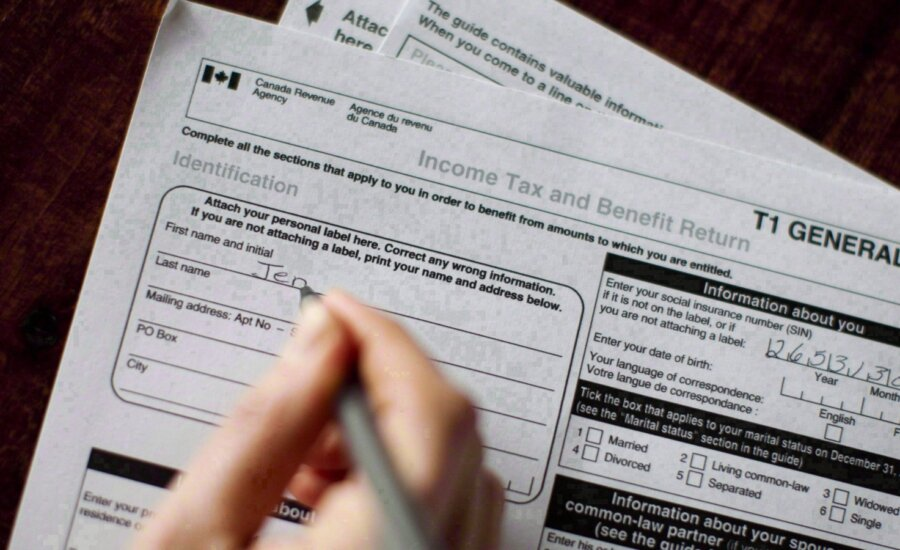
If you think selling your principal residence means you can skip reporting it, think again.
The CRA, backed by the courts, has made it painfully clear that failing to disclose real estate dispositions, even tax-free ones, is asking for trouble.
Since 2016 (when the Liberal government took power in Canada), Canadian taxpayers have been required to report the sale of their principal residence, regardless of whether the gain is fully sheltered by what we refer to as the principal residence exemption (PRE), which means means:
- Reporting the sale on Schedule 3, and
- Filing Form T2091 (IND) to designate the property as a principal residence.
Ignore these steps and you’re potentially handing the CRA an easy reassessment, and possibly a big penalty.
Why the CRA Is So Obsessed With Reporting Home Sales
Officially, these rules were introduced to curb house flipping, a phenomenon where people buy homes, do some repairs / make them look more presentable, then sell them quickly for profit, while improperly claiming the PRE.
Unofficially? It’s also about giving the CRA better visibility into real estate transactions in an era of soaring property values and strained government finances. Again, thank you Liberal government voters.
Call it enforcement. Call it revenue protection. Either way, the message is clear: paperwork matters now more than ever.
What Actually Qualifies as a Principal Residence?
To claim the PRE, all four conditions must be met:
- The property must be a housing unit
- You must own it (alone or jointly)
- You, your spouse or partner, or your children must “ordinarily inhabit” it
- You must formally designate it as your principal residence
Yes, a seasonal property like a cottage or ski chalet can qualify, even if you only use it on weekends or during vacations, as long as it wasn’t primarily acquired to earn income. Intention matters!
No, a rental property generally doesn’t qualify. And if you bought or built a home with the intention of selling it for profit, the PRE may be off the table entirely, regardless of how long you lived there. (See… intention)
Short Holding Periods: Where the CRA Really Gets Suspicious
Properties owned for less than 12 months are under intense CRA scrutiny:
- The PRE is generally denied
- Profits are taxed as 100% business income, not capital gains, CRA might even open a GST/HST account for the business and assess you for that missing tax too.
- Only limited life-event exceptions apply
If you sold any residential real estate, rental or otherwise, within 365 days, you must report it on Part 2 of Schedule 3.
While the formal “flipped property” rules apply to 2023 and later years, don’t be fooled into thinking earlier years are safe. The CRA has always had the power to recharacterize quick-turn real estate profits as business income and it still does.
The Case That Went Sideways Fast
In a June 2025 Tax Court decision, the CRA reassessed a Toronto taxpayer’s 2016 return, claiming he failed to report a $159,282 gain on the sale of residential real estate. The cherry on top? A $21,000 gross negligence penalty.
This wasn’t an unsophisticated taxpayer. He was an active real estate investor who owned multiple properties along Toronto’s Yonge Street and sold several of them in 2016.
The CRA showed some restraint by allowing the PRE on the sale of his actual principal residence even though he failed to report it. But a second property, which he claimed was “always intended” to be his principal residence, didn’t pass the smell test.
He never lived there.
He didn’t file Form T2091.
And he already had another designated principal residence that year.
Unsurprisingly, the CRA, and later the court, rejected the claim.
Blaming the Accountant Didn’t Help
The taxpayer’s defense boiled down to this: “My accountant didn’t tell me.”
That argument failed spectacularly.
The judge pointed out that the taxpayer:
- Held a master’s degree
- Had extensive real estate experience
- Was previously penalized in 2011 for failing to report a real estate sale
- Later became a licensed real estate broker
In other words, this wasn’t ignorance, it was carelessness at best, and willful blindness at worst. The gross negligence penalty was upheld.
The Takeaway (and It’s Not Subtle)
The CRA and the courts are saying this loud and clear:
Even tax-free real estate sales must be reported.
If you own multiple properties, flip homes, or assume the PRE is automatic, you’re playing with fire. The days of “it’s exempt so it doesn’t matter” are long gone.
When it comes to real estate, disclosure is no longer optional, it’s survival.
?? Disclaimer
This article is for general information and commentary purposes only and does not constitute legal or tax advice. Tax rules are complex and highly fact-specific. Readers should consult a qualified tax professional regarding their particular circumstances before taking any action.